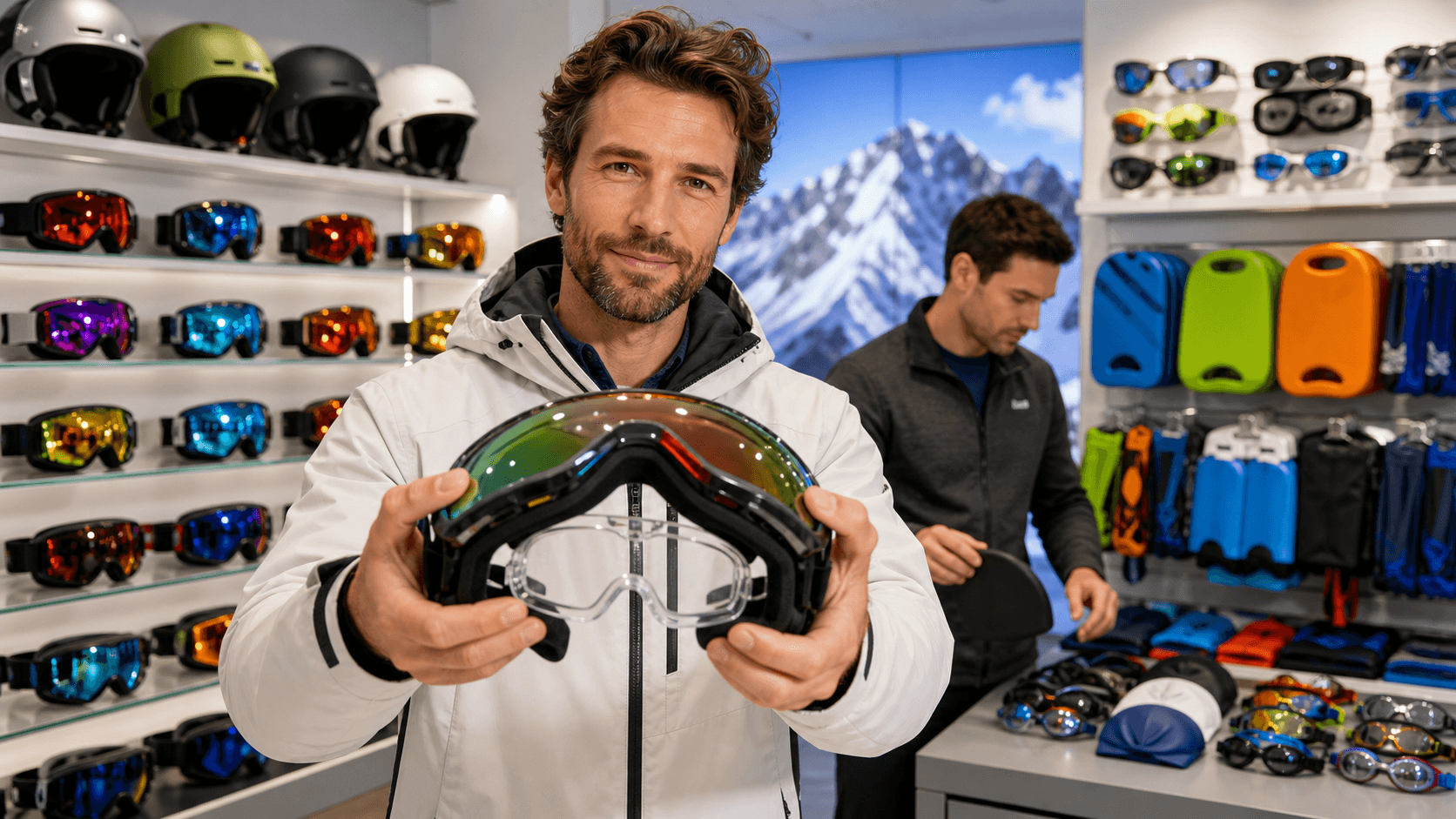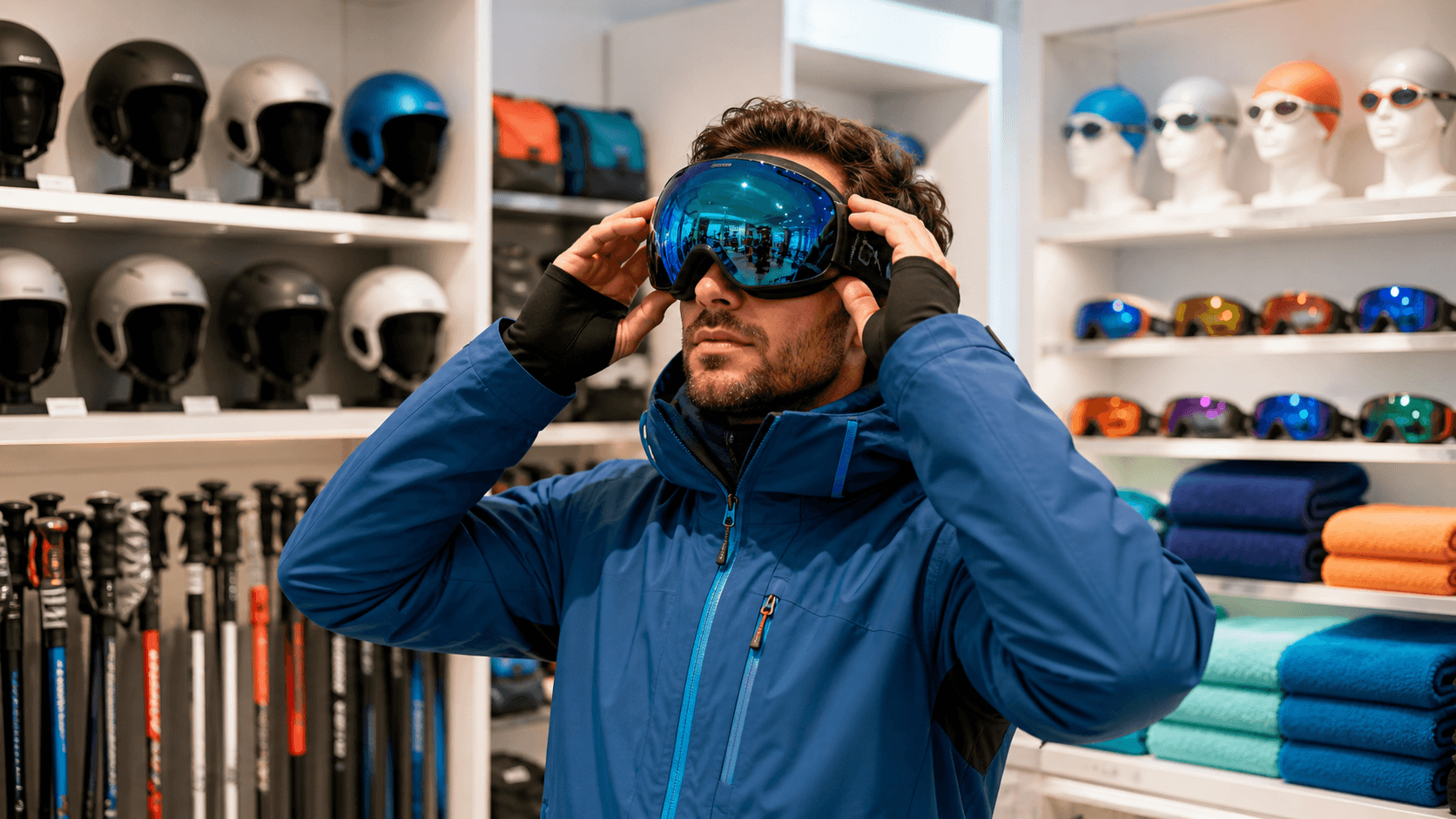
High-altitude mountaineering punishes weak gear, and that includes your goggles. At serious elevation, you are dealing with thin air, stronger sun, blowing snow, and surfaces where a small mistake can turn big very fast. Your eyes are working almost nonstop in those conditions, so the way you see the mountain matters a lot more than it does on a mellow resort day.
In this guide, we break down how spherical ski goggles help you see more clearly and react faster when you are above treeline. We will look at field of view, UV protection, fog control, fit, and how to match lenses to your route and season. By the end, you will know what to look for before you head up high.
See the Mountain Differently at 18,000 Feet
At high altitude, everything is sharper and harsher. The sun feels closer, the snow reflects light from every angle, and the weather can flip from bluebird to whiteout in what feels like minutes. Your lungs, skin, and eyes all get pushed to their limits.
Basic snow goggles often struggle in this setting. Common problems include:
- Warped vision near the edges of the lens
- Narrow side vision that hides hazards
- Heavy fogging from sweat and breath
- Tired, strained eyes after hours of climbing
When you are kicking steps on a steep face or crossing a broken glacier, those issues are more than annoying. They can slow your reactions and pull your focus away from the climb itself. Spherical ski goggles, with their rounded lens shape, are built to solve many of these problems and give you clearer, more natural sight when every step matters. As an outdoor shop based in Sarasota, we care a lot about gear that holds up in harsh sun, on water or snow, and we design our goggles with that same approach and a warranty that backs up their use on serious trips.
How Spherical Ski Goggles Change Your Field of View
Spherical ski goggles use lenses that curve both side to side and top to bottom, similar to the curve of your eye. This shape is different from flat lenses that only bend in one direction.
That extra curve can help you in a few key ways:
- Wider side vision so you can see more of the slope and your team
- Better up and down sight lines, useful on very steep ground
- Less distortion at the edges, so rocks and ridges look true to size
On mixed ice and rock, you want to see small details like thin ice smears, loose stones, or a better tool placement just off to the side. A bigger, clearer view makes it easier to scan from your feet up to the horizon without twisting your neck all day. When you are tied in with a rope unit, it also helps you keep track of where everyone is relative to anchors, crevasses, and seracs.
Because the image through a good spherical lens feels more natural, your eyes do not have to fight to refocus every time you glance to the edge of the frame. That can mean less eye strain during long summit pushes and fewer tension headaches after hours of squinting into bright snow and shadow.
Protecting Your Eyes From Extreme Alpine Light
Light at elevation hits your eyes from above, from the side, and from the snow at your feet. With each step higher, the UV intensity grows, and the white surface throws that energy right back at you. This kind of exposure can lead to snow blindness, irritated corneas, and long-term damage if you repeat it often without proper protection.
For high-altitude use, pay attention to lens tech that goes beyond simple tint:
- UV400 protection that blocks both UVA and UVB rays
- A suitable visible light transmission, or VLT, for your conditions
- Anti-reflective coatings to help cut harsh glare
On late-summer and early-fall mountaineering days, the sun can be high and harsh when clouds clear. Darker tints or strong mirror finishes help tame bright summit light. Medium tints work well when clouds move in and out, giving you flexibility as the sky shifts. Spherical lenses, because of their shape, can also help lower internal reflections that sometimes bounce around inside flat lenses. That can reduce the tunnel-vision feel and help your depth perception when you are judging snow bridges, big ice blocks, or the shape of a wind lip.
Anti-Fogging, Fit, and Venting for Summit-Day Reliability
Big objective days are a perfect storm for fogged goggles. You start in the dark with a buff or mask over your mouth, your breathing is heavy, and as the sun hits, the air warms while you keep sweating under a helmet and hood. Moisture inside your goggles wants to condense on the coolest surface, which is usually the lens.
Look for features that fight this:
- Dual-pane lenses that help balance temperature inside and outside
- Quality anti-fog coatings on the inner lens
- Vent systems that move air without letting in spindrift
Fit is just as important. Your goggles need to sit solidly over a beanie or helmet without wobbling every time you plant your feet. A wide, adjustable strap should be easy to fine-tune with gloves on. When you are front-pointing or downclimbing, you want your goggles to stay locked in place as you look up, down, and to the side.
Frame and foam design matter on long days. Multi-layer foam can help wick sweat while keeping a soft, even seal around your face. A frame that stays flexible in very cold air reduces pressure points around your nose and cheekbones, so you are not tempted to pull the goggles off mid-ascent just to get relief.
Choosing the Right Spherical Goggles for Your Route
The best spherical ski goggles for you depend on the type of peaks and seasons you prefer. A glacier-heavy route with long snowfields and bright reflection will ask more from your lenses than a mostly rocky ridge with short snow crossings.
Think about:
- How much time you expect to spend on snow and ice
- Typical weather windows for your area and season
- Usual start and finish times, especially if you move in dawn or dusk light
Many climbers like to build a small lens set, so they can swap for the day at hand. For example, you might keep:
- A dark, high-sun lens for clear summit pushes
- A medium, all-around lens for days with mixed sun and cloud
- A higher VLT option for very bright, high-glare snowfields
Durability also matters at higher altitudes. Scratches, cracks, and broken buckles can end your use of goggles fast when you are far from home. Strong coatings, impact-ready lenses, and sturdy straps are worth choosing for multi-season use. At YLYueLang, we pair that mindset with a two-year warranty, because we expect our goggles to see real use across more than one climbing season.
Before any big trip, a simple gear check helps a lot:
- Test anti-fog performance on hard hikes or training climbs
- Fit goggles with the exact helmet and face mask you plan to wear
- Confirm the strap has enough length to go over thick hoods
- If you have room, pack a backup lens or a spare goggle
Gear up Now for Your Next High-Altitude Push
High peaks demand more from your eyes than casual days on snow, and old or basic goggles often show their limits as soon as conditions turn rough. Taking time to match your spherical ski goggles to your route, season, and light levels can pay off with clearer sight, calmer focus, and safer footing.
At YLYueLang, we care about eye protection across water and snow, from bright Florida bays to high, cold summits. When you choose spherical ski goggles that fit well, resist fog, block strong UV, and match your most common conditions, you are not just adding another piece of gear. You are protecting one of the most important tools you carry into the mountains, your vision.
Upgrade Your Mountain Vision With Precision Gear
Discover how our spherical ski goggles can give you a wider field of view and clearer optics on every run. At YLYueLang, we design our gear to keep you comfortable, protected, and focused in rapidly changing mountain conditions. If you have questions about fit, lenses, or performance features, feel free to contact us so we can help you choose the right setup for your next trip.